I. The Only Jews I've Met in Alaska
[drop-cap]
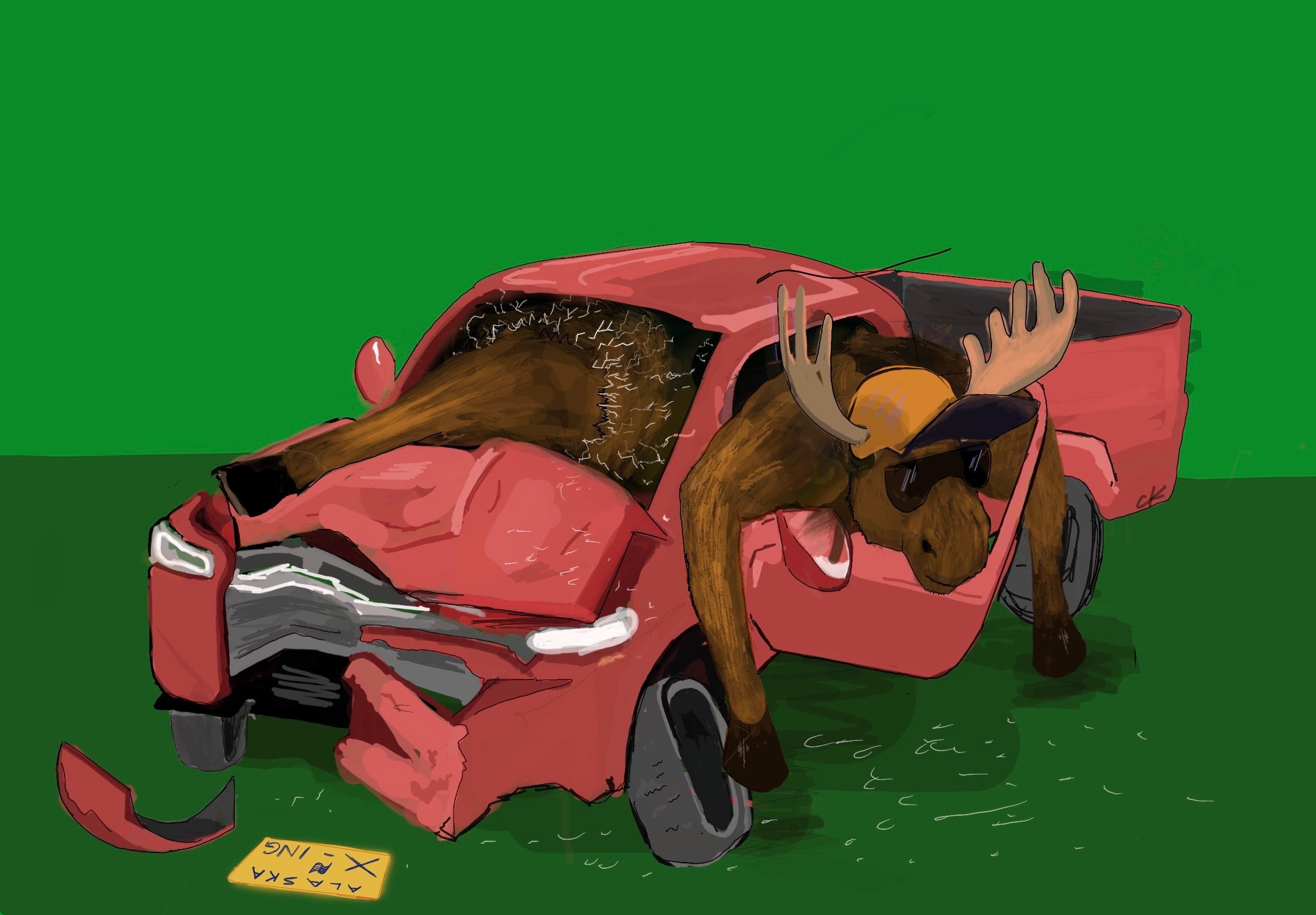
I’m in Alaska working as a field organizer on Mary Peltola’s Democratic campaign for the senate. I spend my days begging volunteers to knock on their neighbor's doors and pitch “Fish, Family, and Freedom,” our candidate’s rallying cry. I am eating a lot of salmon. I feel very free. I have yet to meet a wife and settle down. This state is wonderful! Glacier and raspberry-loaded mountains ring my little town, duplicating their beauty in the crystal clear bay. The last frontier lives up to its name, harkening back to the America of open land and opportunity. Bald eagles soar overhead, moose race across the highway, salmon swim the rivers in the millions (although no longer the Kings)… Alaska is wonderful. And it’s so Alaskan.
But it isn’t very Jewish.
To begin with, there aren’t many Jews. In the several thousands of doors I’ve knocked, I’ve only ever come across one mezuzah. “Shalom!” They told me to go away. The Jewish shelf at Fred Meyers (Alaska’s megastore of choice) exists on a dusty technicality, expired gefilte fish rubbing elbows with ancient Matzah. Dome-topped Russian Orthodox churches (yes, there are still Russians here) and non-descript Protestant congregations bear the weight of bringing G-d's words to the pines. Also—Mormons. Far more than you would expect.
But I’ve been to many parts of the world boasting a low Yid-density. I lived three years in Switzerland, I’ve travelled all through central Europe—heck, they practically invented low Yid-density. But still, Alaska stands out. And starkly.
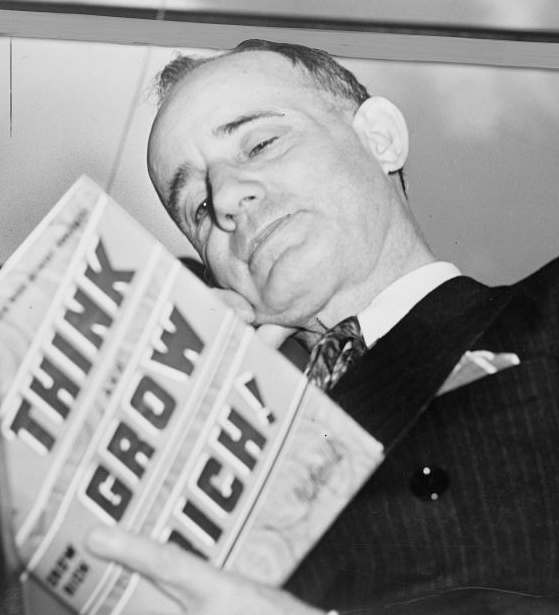
Philip Roth, that pen and paper pickler of East Coast Jewish culture, will help me explain. I found myself slogging (sludging!) through a Roth book—Zuckerman Unbound—after long days campaigning. Night after night the book was cast to the edge of the bed, replaced by the Where’s Waldo book I’d found at a secondhand shop (Book III, the Fantastic Journey). As the high holidays neared, I grabbed the dog-eared Zuckerman from its corner-of-the-bed banishment and thumbed through it, mulling over what was missing. Where was my usual rapturous Roth-given joy?
My-mumbling-under-my-breath-“thisbookissogood”-end-of-day-semitic-fix? Why was I having such a hard time connecting with the stories of Judaism in the Great North?
The next day I knocked on doors in the rural town of Nikiski, a particularly conservative precinct where our local canvassers refused to venture. Dirt roads, big dogs, big guns… manifest destiny. Alaskans did with their land as they wished.
As they wished?
Nathan Zuckerman’s familial anxieties and Freudian obsessions were incomprehensible in the quiet anarchy of the frontier woods. Alaska’s don’t-question-my-lifestyle libertarianism and Newark’s you’re-killing-your-mother-the-way-you-slouch-at-the-table Judaism; each distinctively American. Yet seemingly at odds.
And so I resigned myself to a handful of months of life as a good-old-american-whitey. I would give it a spin as a Protestant! Or a Mormon. Or maybe a Russian. I gave up on Roth, at night committing myself fully to tracking down Waldo’s whereabouts.
But then, as the summer properly turned to fall and the High Holidays neared, the Alaskan Jews started to make their way out of the salmonberry brambles. What follows are the only Jews I met in all my time in Alaska.
First came Carole, our most dedicated volunteer in the tiny town of Moose Pass (where there is an excellent fudge store), and at 83 a brilliant canvasser. Carole converted at the age of 72, seeking a connection with G-d after failing to find it in either Jesus or the woods. Somehow, despite living closer to a glacier than a real-life breathing Jew, she found Judaism. On Yom Kippur, Carole drove the two-and-a-half hours to Anchorage for services (at Anchorage's only non-Chabad congregation, the “Frozen Chosen”) and drove the two and a half hours back immediately afterward. While fasting! And Carole was originally from New Jersey, not too far from Newark…
Then came Rabbi Mendy Greenberg, Chabad Rabbi in the extremely conservative Mat-Su valley. He had my brother, Jack—who uncoincidentally is also canvassing for Peltolta—over for Shabbat dinner at 9pm to accommodate the midnight sun. His father had been personally sent to Alaska by the Rebbe. Mendy, as it turns out, spends his days engaged in activity quite similar to mine. Equipped with lists of people in his valley with Jewish sounding names, he knocks on doors to find Jews for a minyan. These attempts, he admitted, were higher in terror than they were in success. But still, at that dinner—attended only by my brother and some traveling rabbis from New York—they danced together in the well-insulated basement just as if it was Brooklyn. And on Rosh Hashanah, his door-knocking managed to scrape together 10 barmitzvahed Jews to form a minyan. The Rabbi had a harder time recruiting for Sukkot, where the liturgical requirement to eat and sleep in the three-walled tent met unpleasantly with Alaska’s unreasonably early frost. Every year as a kid, he recalled, he caught a cold after the holiday. This year, he thanked G-d for climate change—it was still in the 40s!
Then came Kenneth—a high school debate champion who wandered into our office and quickly won himself an internship. Kenneth lived in one of those anarchic neighborhoods, his house down a dirt road in the other precinct our volunteers wouldn’t venture, dog-infested Sterling. His grandparents were hardcore conservative Christians, and his parents irreligious, but at an environmental conference in Anchorage, Kenneth met a brilliant Rabbi who showed him the wisdom of the Jewish faith. Now Kenneth wore a Star of David. Kenneth couldn’t help but argue with the conservatives we met on the doors—“Here’s why the science actually proves that climate change is real.” It rarely worked. I asked him why he bothered—“The dialogue!” Kenneth hasn’t been able to find his magical Rabbi since the conference years ago. Given the numbers here, I suppose there’s a good chance it was Mendy. I should probably connect them.
And finally I met Dave Paperman, the only other Jew in Seward. A brilliant guy with a wild Jew-fro, Dave is engaged in a vicious sign war with the town Republicans, devising all kinds of sign-contraptions to accommodate the local ordinances. He has discovered that if you make a giant sign combining the smaller political signs on a large wooden back, it gets around the one-political-sign-per-property rule. Dave and his wife Dana had me over for dinner. Upon walking in, I spotted my first Hanukiah of the state—on the mantelpiece beside a framed photo of their son mushing sled-dogs in the Iditarod. Chatting over the meal, we quickly discovered that Dave went to high school in northern New Jersey with one of my Mom’s childhood best friends. We were eating just-caught sockeye salmon. But I could have sworn it was lox.
Much like the giant vegetables of Alaska’s Mat-Su valley, which grow endlessly in the summer’s constant sun, these are giant Jews. Distinctively, undeniably, undoubtedly Alaskan. But Jewish—and in such a clean, refreshing way. Kind of like the taste of a fresh caught silver salmon…
Roth spent the last 22 years of his life in Warren, Connecticut. A town of 1300 people nestled in the thick New England woods, many miles from a congregation, even further from Manhattan. In that quiet anarchy of rural America.
I’ve returned to the Zuckerman book. It still doesn’t completely fit, but I’m enjoying it. I like to read it after dinner, which is generally some iteration of the 20 pounds of moose meat a volunteer gave me. Delicious! And, Mendy confirms: kosher, too.
II. The Travelling Baleen Salesman
[drop-cap]
In the Kenai Peninsula, our campaign field office shares a wall and a roof with a Mexican restaurant—“Papi’s” (formerly “Don Jose’s”). For some reason, the sign advertising Papi’s actually rests closer to our office’s door. As a result, and despite the campaign signs plastered all over our windows and doors (“Mary Peltola for Senate,” “JKT for Gov,” “NO ON 2”), people wander in at least twice a day thinking that we’re Papi’s. Typically their eyes glaze over as they try to make sense of the new high concept dining-X-politics-fusion joint they’ve apparently stumbled upon. I’ve dubbed it the “Mexican mistake,” and for months now have been lobbying my boss, Kieran, to let us serve guacamole and chips.
Earlier this week Kieran had a friend visiting from “down south” (i.e., out-of-state). After a late night cantina feast at Papi’s, he was showing him the office. Suddenly a man—a stubby, somewhat scruffy-looking native—came barreling in. Kieran pointed him next door, explaining that this was a campaign office and, thus, dinner was thataways.
But the man wasn’t there for an Alaskan enchilada. He was there, he explained, because he had something for us. He was a travelling baleen salesman. And he wanted to sell our office a chunk.
Baleen? Baleen. A part of a whale, right off of the jaw, that lets the krill-munchers filter-feed the oceans. Nine-foot-long plates of tough keratin that hold in place the broom-like strands which block the non-krill residents of the sea from the whales’ gaping—but apparently choke-prone—maws. The salesman, visiting from the tiny village of Togiak and only in town for the night, was stopping in every store and office whose lights were still blazing. He thought that our phalanx of signs would be well-accompanied by a plate or two.
Baleen is, of course, highly illegal to sell. But! If it’s used in the production of Indigenous art it becomes kosher in the eyes of the law. And, the salesman was sure to point out, on the bottom of the plate of baleen he had dragged into our office were scratched his initials. Which made it art. And thus legal.
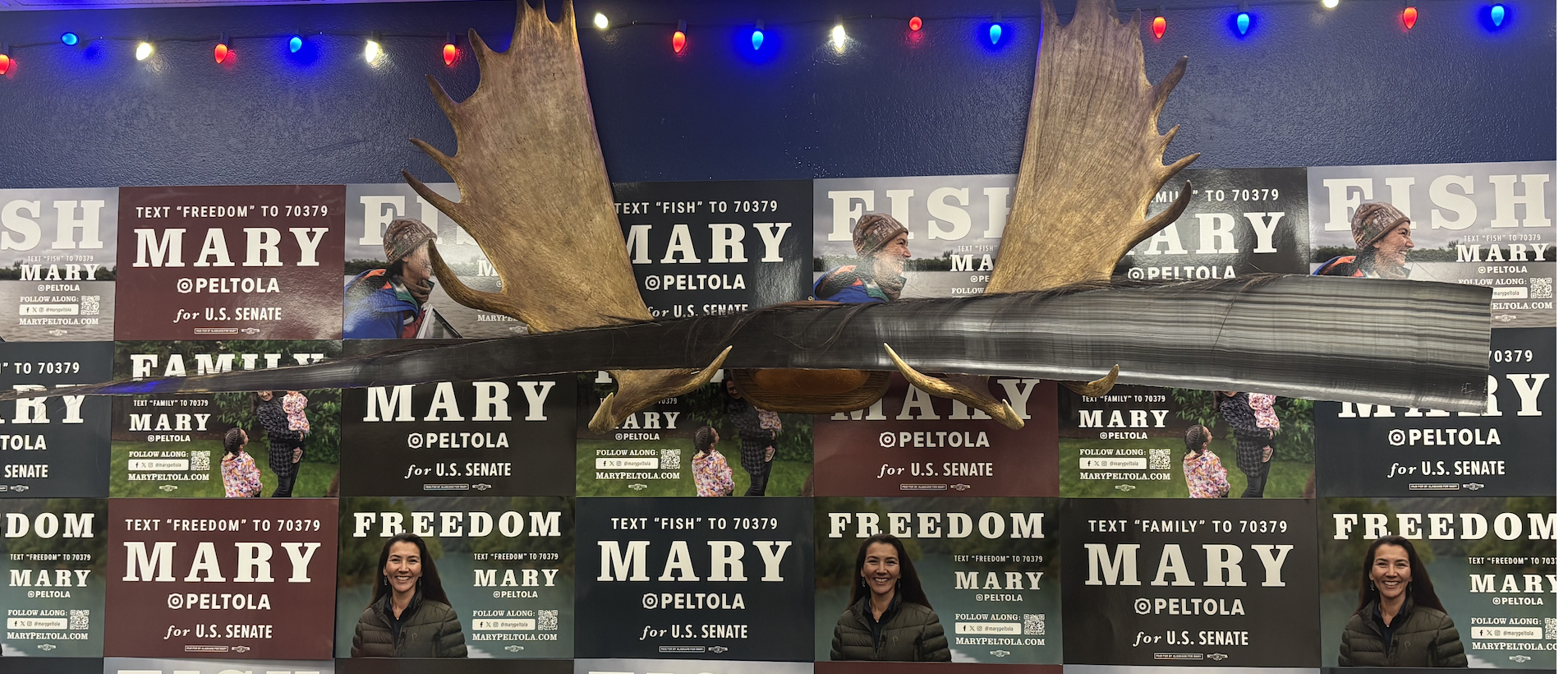
Kieran bought it for $260. We have it on the wall, nestled atop the mounted Moose antlers a volunteer gave us.
Alaska isn’t very Mexican. And it’s not very Jewish. But it’s so damn Alaskan. I love it here.