
[drop-cap]
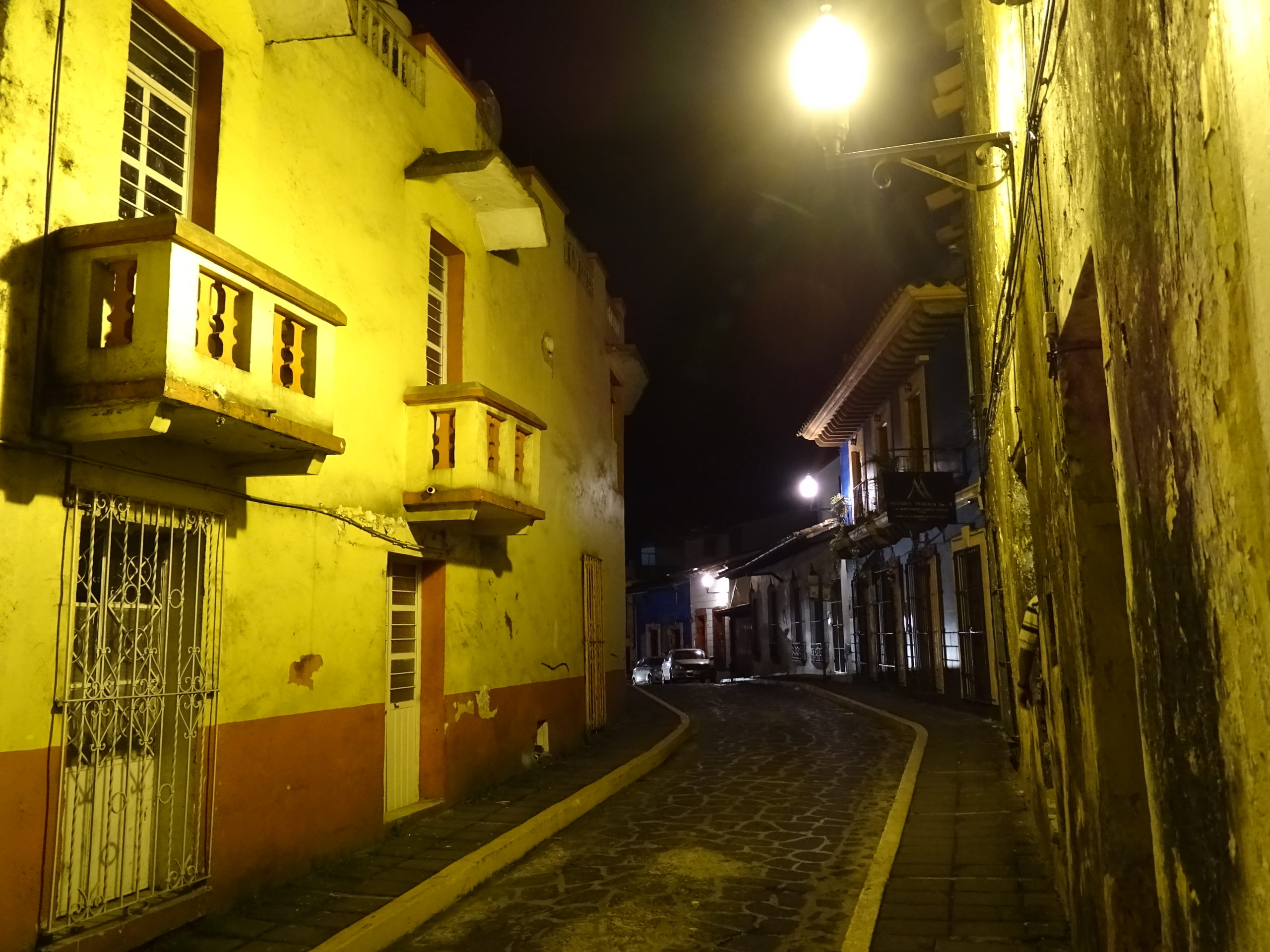
THERE IS A SLICK ON THE SURFACE OF PRAGUE that shimmers like the greasy iridescence of an oil spill. Coating the city’s historic neighborhoods, this tourist slime fuses images of Franz Kafka’s elegant, moony gaze with stalls hawking trdelník stuffed with whipped cream and shop windows tumbled with rubber duckies, mass-produced tourist marionettes, cheap (but not inexpensive) gaudy glass, and sugary mounds of candy.
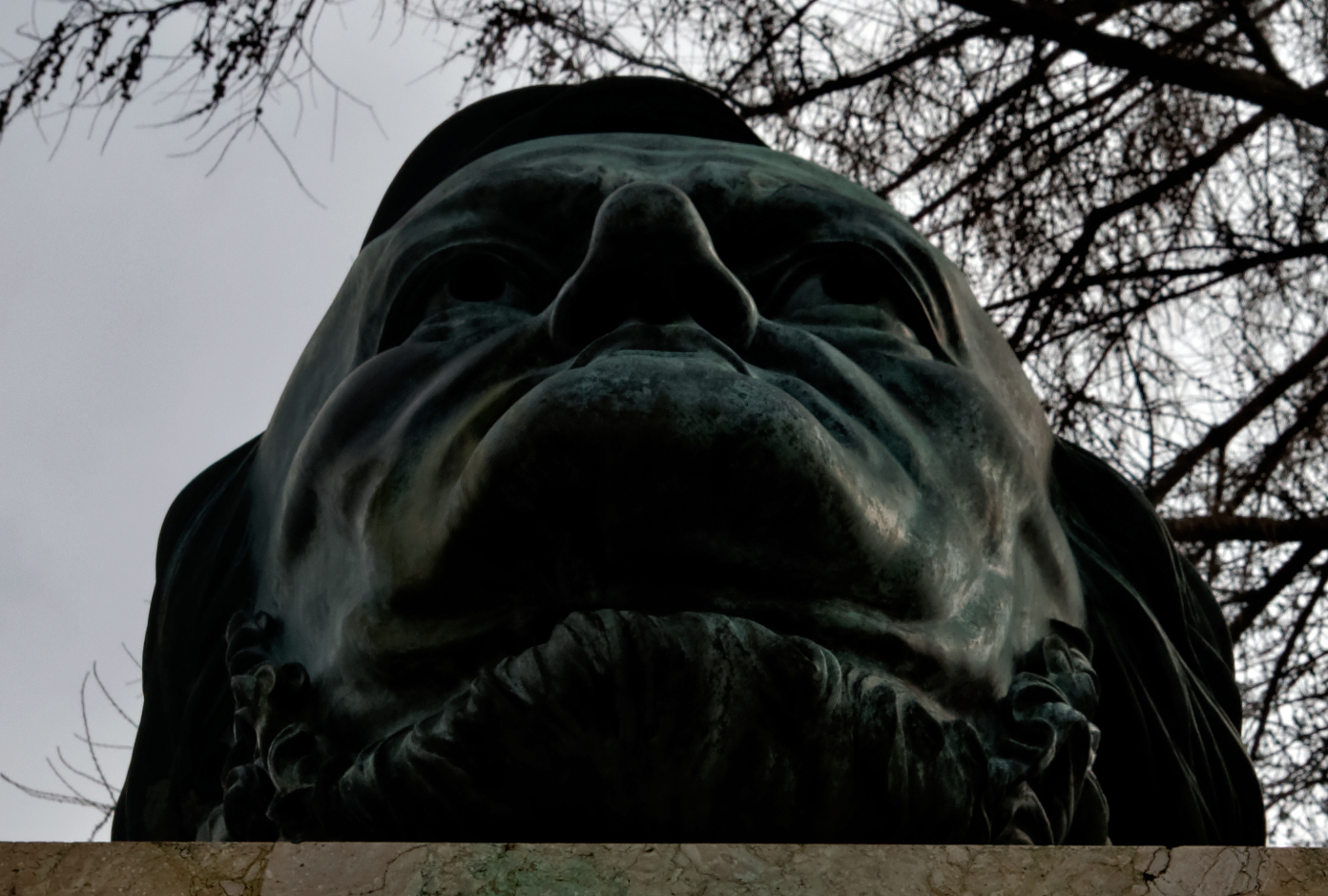
Every day, tourists cluster around Jaroslav Róna’s sculpture of Kafka, installed in a tiny cobblestone square on a street where the Staré Město and Josefov neighborhoods mingle. In it, the figure of a young Kafka rides the shoulders of a massive headless suit, its collar, lapels, and cuffs gaping and empty, its footless legs stuck mid-stride in the sculpture’s base. The tourists rub Kafka’s diminutive bronze feet to a shiny brightness. But they would not recognize Franz Kafka’s short story, “Description of a Struggle,” the source of the sculpture’s imagery, any more than they notice or understand the significance of the Art Nouveau sculpture of the religious reformer Jan Hus two blocks away on Old Town Square.

You can encounter Kafka in his hometown, but you cannot meet him there. Without some awareness of the history of the old city, which has existed in such close proximity to the epicenters of the modern world’s upheavals, it is no more possible to see Prague 1’s ordinary daily life today than it is to imagine Kafka’s everyday world in the Prague that spanned the Austro-Hungarian Empire through the First Czechoslovak Republic. Kafka has indeed become an icon, a concept explored by Franz Kafka at The Morgan Library and Museum (November 22, 2024 through April 13, 2025). But as Kafka’s baffling, pervasive presence in Prague makes clear, any representative symbol—and perhaps especially this one—is pliable and unfathomable.
The question of what it means for Kafka to be an icon is raised both implicitly and explicitly by the exhibition, which was organized in collaboration between The Morgan Library and The Bodleian Libraries, University of Oxford, where the writer’s archives are housed. Explicitly, in Franz Kafka, the writer’s iconic status is the direct creation of his friend Max Brod, who published and promoted Kafka’s work both during Kafka’s life and after his death in 1924, who refused to abide by Kafka’s request that his papers and unpublished work be destroyed after his death, and who managed to escape Prague with a suitcase full of Kafka’s papers on the last train before the Nazi invasion in March 1939. His iconic status is also the work of the scholars and translators who have taken such serious care with this German-speaking Czech writer’s legacy.
The exhibition’s catalog, Franz Kafka: Making of an Icon, edited by Ritchie Roberston, is one such example and well worth reading.1 Its engaging, scholarly essays place Kafka’s life and his works within diverse literary, cultural, historical, and biographical frameworks. Reflecting the import of the Kafka archives, Robertson and the five other contributors are all respected Kafka scholars and either Oxford faculty (Robertson is retired) or post-doctoral research fellows there. Katrin Kohl and Karolina Watroba, in “Kafka’s Global Afterlives,” directly address the creation of the “lonely genius” persona that has been packaged and marketed, the invention of the “Kafkaesque,” and Kafka’s lasting impact for generations of writers, especially through varied translations. Other essays, such as Roberston’s “Kafka’s Life and World,” provide family and social background. Carolin Duttlinger’s and Barry Murnane’s contributions examine geographies and constructed spaces, colonialism, human identity, and the presence of animals (nonhuman creatures) in the writer’s novels and stories. Kafka’s multifaceted relationship with Judaism, as both culture and religion, is explored in Roberston’s “Judaism and Religion.” With meticulous breadth and depth, the catalog sheds nuanced light on the context of Kafka’s writing and his continuing cultural importance.
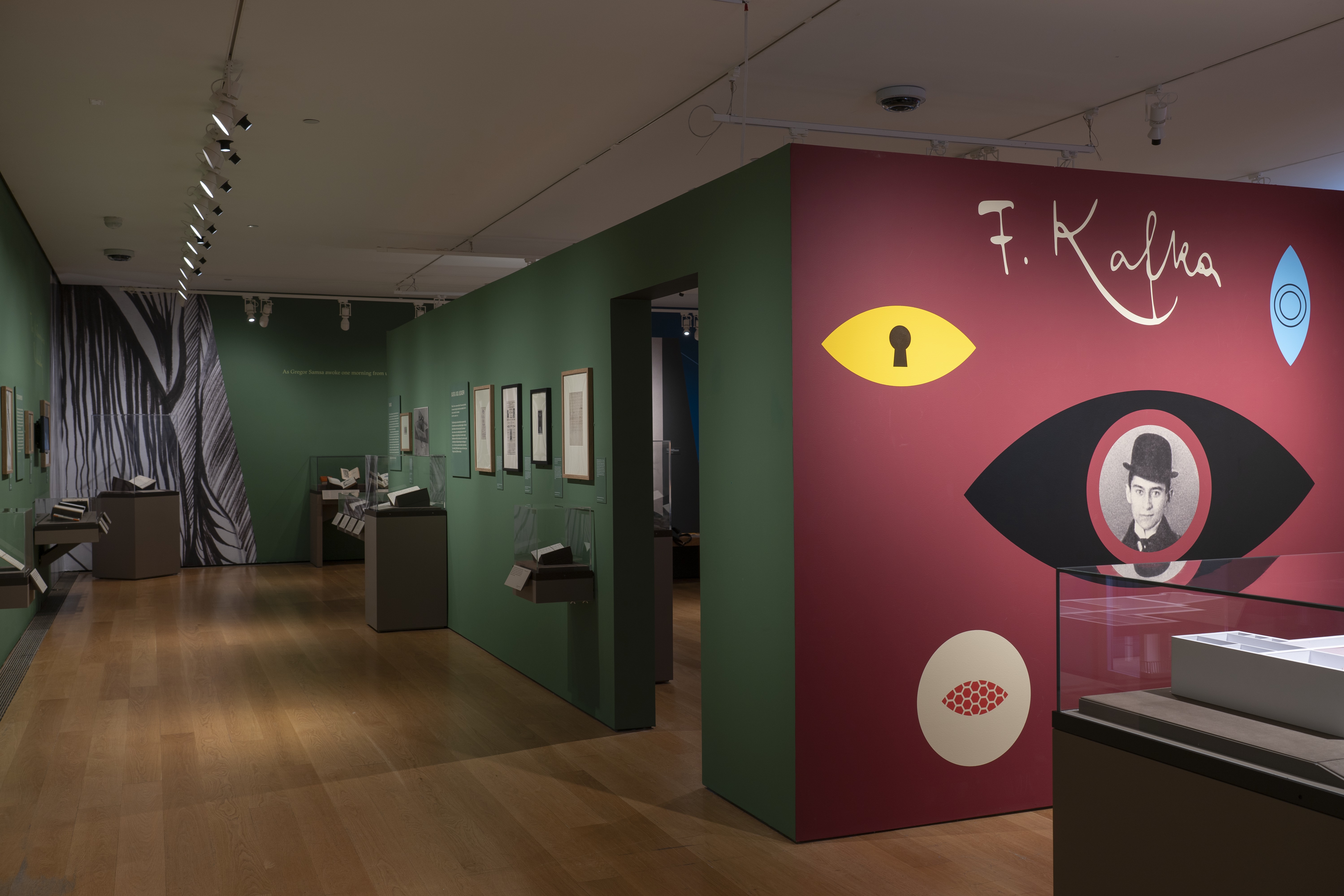
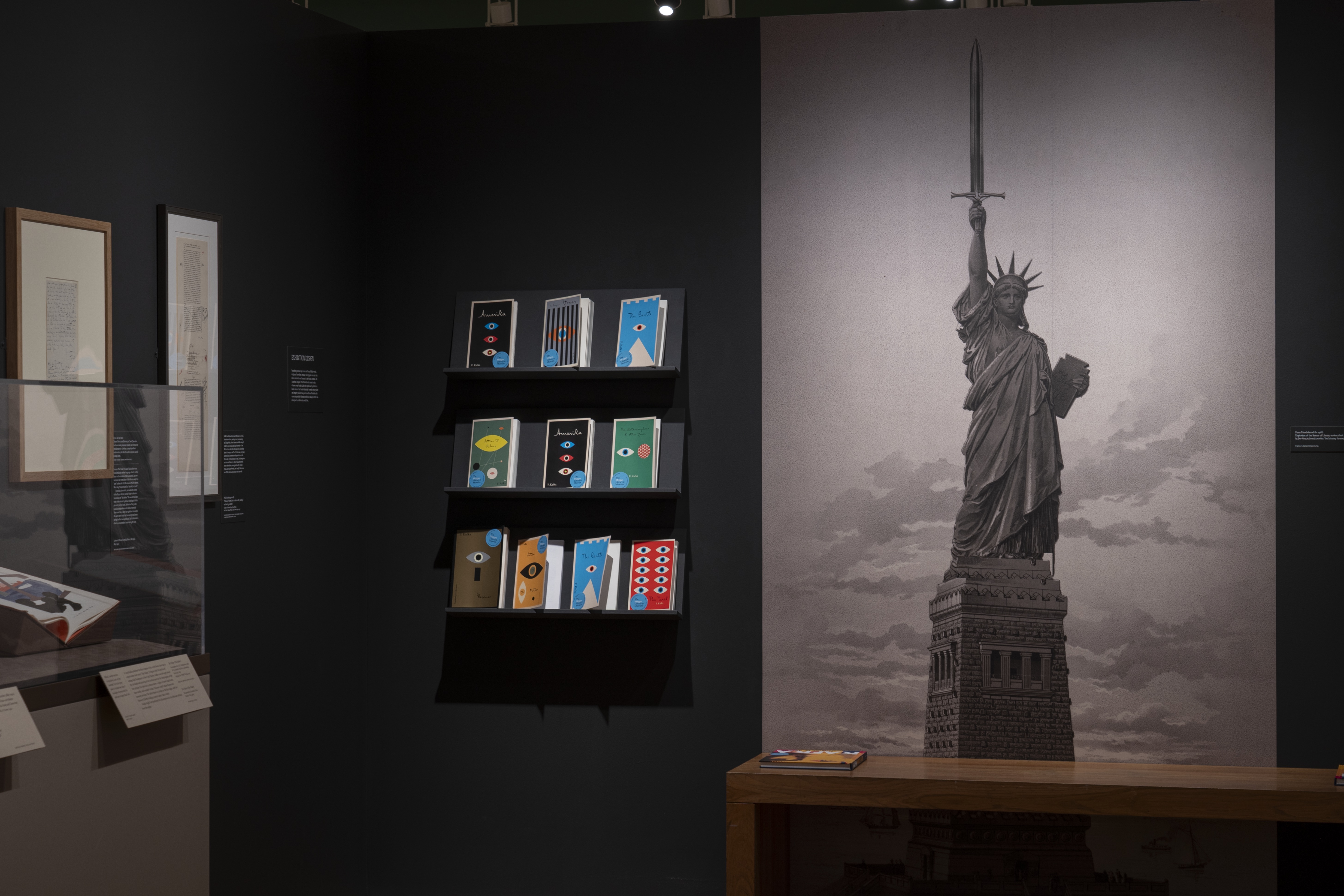
The exhibition was visually designed around the Schocken Kafka Library, the fourteen titles published by Schocken Books, a publisher specializing in Jewish literature. (Founded in Germany in 1931, the company moved its operations to the United States in 1945 and is now an imprint of Penguin Random House.) Regarded as the definitive English translations of Kafka’s stories, novels, diaries, and letters, the Schocken Kafka Library is also unified by Peter Mendelsund’s striking 2011 cover designs. Mendelsund’s covers incorporate an original typeface based on Kafka’s handwriting with pictographic elements, especially an eye motif, and a kind of modernist geometric austerity in richly subdued primary and secondary hues on a neutral ecru background. The designers based the installation design on the look of the Schocken series in collaboration with Mendelsund. And the exhibition included a quiet corner where visitors could sit and browse various titles, inviting viewers to become (or continue to be) readers of Kafka’s words rather than simply spectators of the accumulated documents and documentation of his life and influence.
The concept of an icon is not stable. An icon’s symbolism is at best enigmatic and fluctuating and at worst either kitsch or sensational and proselytizing. Characterizing Kafka as an “icon” raises the question of who or what this icon represents.
Among the many Kafka sites in contemporary Prague is the Franz Kafka Museum in Malá Strana, Prague 1’s historic “Little Town” neighborhood. The museum is at once overdetermined and angst-ridden. Its chiaroscuro lighting and pounding soundtrack, which includes segments of Bedřich Smetana’s Ma Vlast (“my country,” but literally “I have a homeland”), creates a deliberately histrionic atmosphere at once manipulated and hyper-charged. If you can withstand its theatrics, however, the museum presents a reasonably thorough overview of Kafka’s life and milieu. It is possible to glean accurate information about the writer’s childhood, education, and family, as well as the pervasive antisemitism that was inescapable not only in Bohemia but throughout Europe during (and, of course, before and after) Kafka’s life. You can see photos and descriptions of the intellectuals, writers, and artists with whom Kafka routinely interacted, gain a sense of his work life (and his feelings about his work life) at the Workers’ Accident Insurance Institute for the Kingdom of Bohemia, and track his most significant love affairs and broken engagements. The Franz Kafka Museum in Prague, a permanent exhibition, presents an information-rich but artful “experience” of Franz Kafka as an icon of the tormented misfit.
Franz Kafka at The Morgan Library, however, presented Kafka neutrally, as an entirely normal man. This view of the man and the writer is analogously imperfect but useful. Franz Kafka was a “normal” man, far less angsty and weird than cliché suggests. His writing and his hopes for his writing were inextricably linked to the contours of an ordinary life, the life that a man with Kafka’s abilities could live within his cultural circumstances.
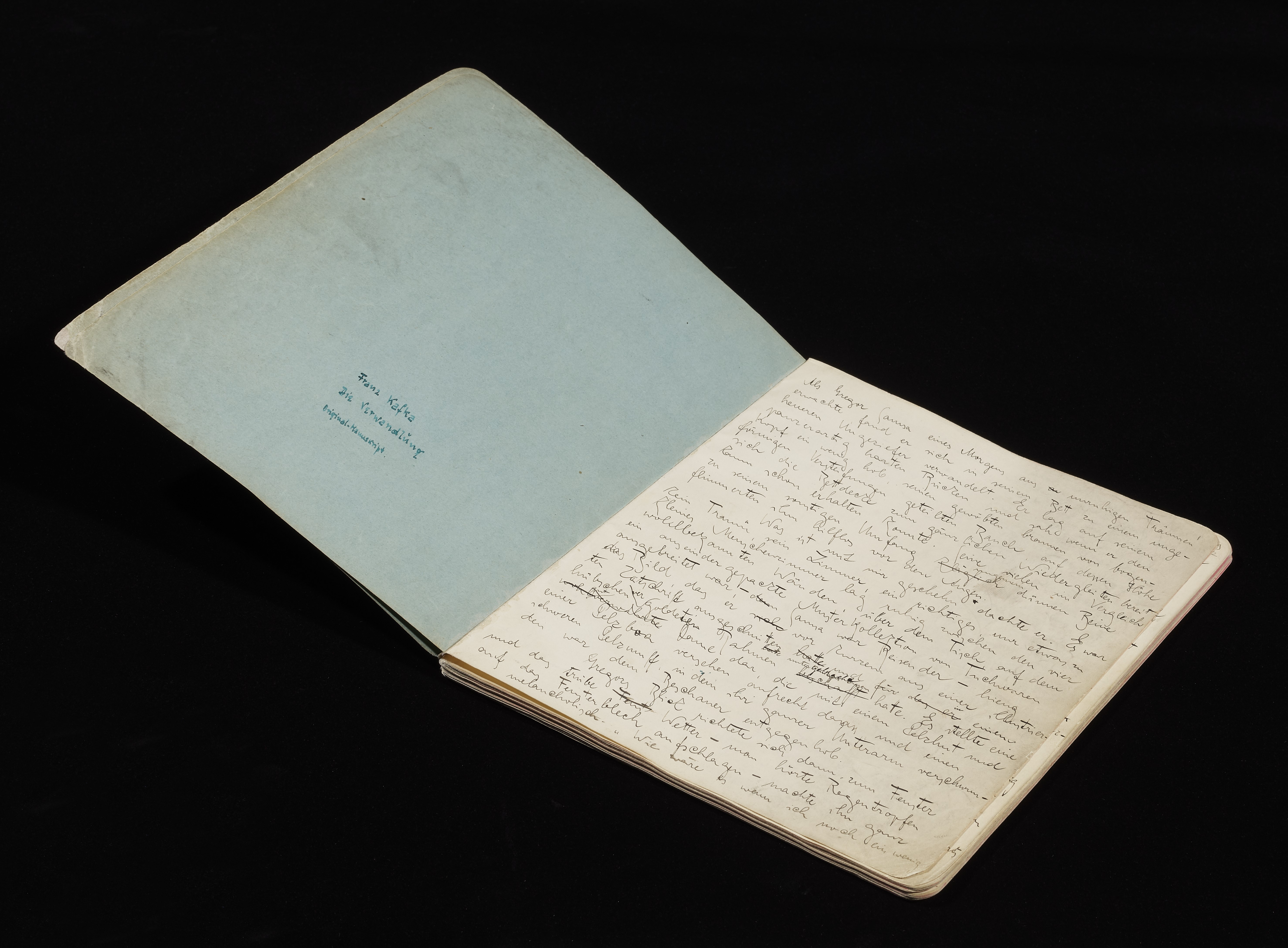
The exhibition fused segments about Kafka’s family, work, health and wellness, travels, development as a writer, relationship with Judaism and with modernist Prague to segments devoted to specific texts, including The Metamorphosis, Amerika: The Missing Person, and The Castle. Prominent in the exhibition was an emphasis on Kafka’s travels and the postcards that he sent to family and friends, especially his most beloved and youngest sister, Ottla.
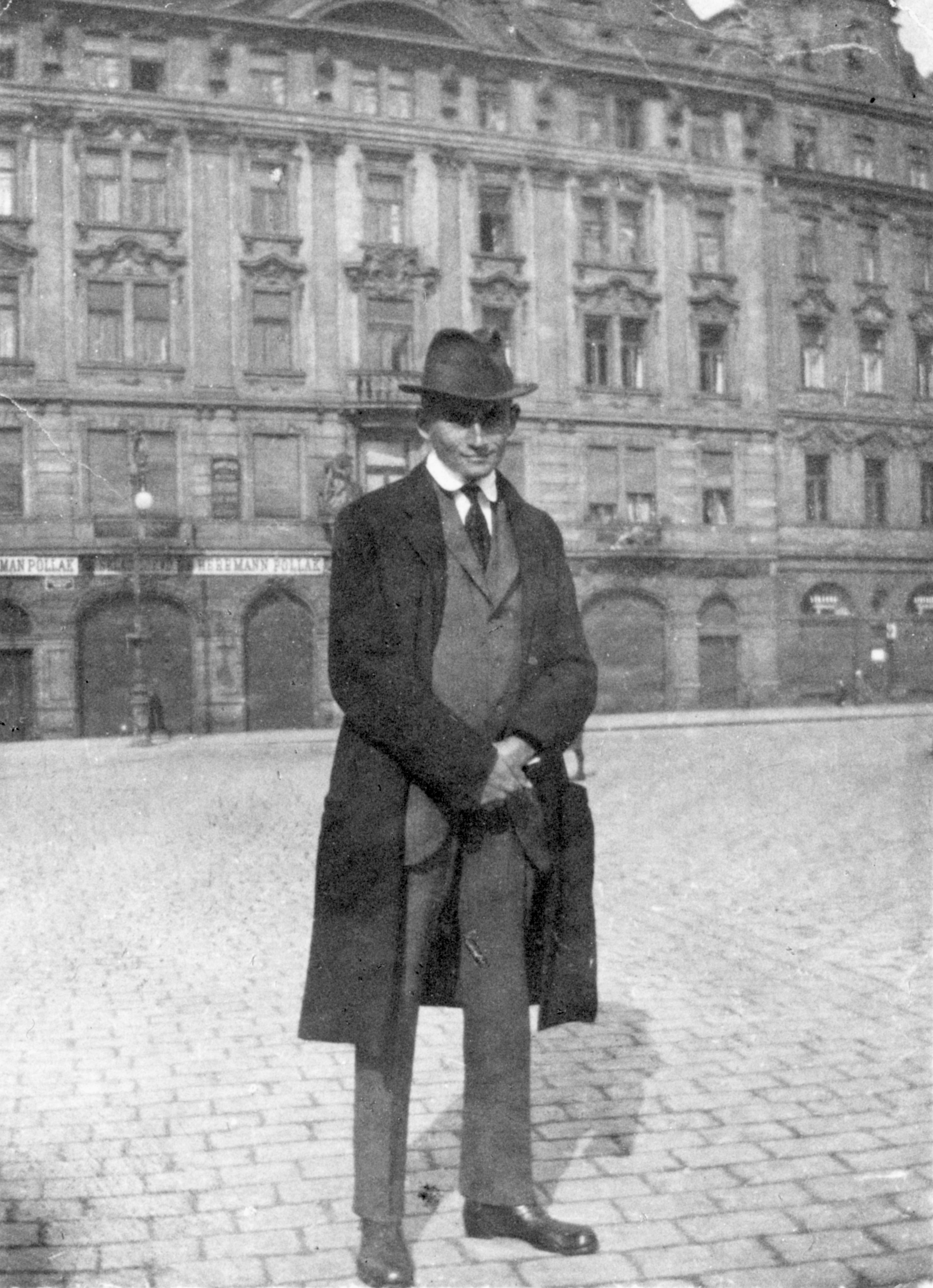
Franz Kafka was a normal man, navigating his relationship with his family and his parents’ expectations for him, taking pride in his workplace safety reports and sharing them widely with family and friends, traveling with his friend Max Brod, and chaffing at the demands of everyday life that interfered with his artistic ambitions and need to write. His normalcy and kindness are not well known but clearly documented. An engaging example of his kindness and ordinariness can be found in Alice Herz-Sommer’s account in photographer Dennis Carlyle Darling’s Borrowed Time, a documentation of the child survivors of the Nazi concentration camp, Terezín.2 Herz-Sommer recalls Kafka as someone she and her twin sister knew as children, a frequent visitor to their home, who came to talk with their mother about her writing and who was “a slightly strange man, kind, indecisive, and always ‘dressed for the office.’ He didn’t talk a lot, but rather loved quiet and nature.” Kafka’s biographer Ernst Pawel describes his office demeanor as “generous to a fault” and possessing “startling candor and gentle manners."3
While it is important to demystify Franz Kafka, there was something about the approach taken by Franz Kafka that created a too conventional image of the writer. A companion who viewed the exhibition with me stopped at one point and mused, “This exhibition reminds me of that Us Weekly feature, ‘Stars — They’re Just Like Us!’” This observation captured the homogenizing gestalt of Franz Kafka. The exhibition repeatedly coaxed visitors to feel—if not consciously think—that Kafka was a regular guy, no different or not much different than themselves. “Franz Kafka!” they might have thought, “He had to learn to get along with his parents—Just Like Us!” “Kafka! He was a wellness enthusiast—Just Like Us!” “Kafka! His day job was a drag—Just Like Us!” “Kafka! He took vacations and sent postcards to his family and friends—Just Like Us!” Relatability and normalcy may be a welcome and stabilizing adjustment for a mythologized writer who has been metamorphosed into a bizarre creature, but the writer’s words ask the reader to do something more complex than canonize his personality as ordinary or mystifying.
Kafka’s kitschy tourist persona in Prague suggests the necessity of learning about the writer and placing him in an accurate biographical and cultural context rather than fabricating an elusive, fictional archetype. It is almost impossible to briefly but clearly characterize Kafka’s complex cultural situation. The Prague in which Kafka was born and lived was a crossroads of the modernist tensions that still reverberate in today’s world. Rapidly evolving technology and mechanization were experienced as both liberating and dehumanizing. Rising nationalisms vacillated between the virulently autocratic and the inclusively democratic. Bureaucracies drifted among the imperial, the civic, the corporate, and the dictatorial. A babel of languages vied for influence in a jumbled whirl. Prague was a multinational and multilingual city. Kafka spoke and wrote in German, the official language of the Austro-Hungarian Empire, but he was also relatively fluent in Czech, the language of a tenacious Czech nationalism, and both familiar with and curious about the Yiddish at the center of Prague’s Zionist movement.
Kafka’s narratives possess the instructive metaphorical significance of fairytales or nightmarish dreams, not to be transcribed onto everyday life but to be regarded as lenses by which everyday life’s elusive pain can be rendered intelligible. His imaginary landscapes may be factually inaccurate at times—as for example the Statue of Liberty holding aloft a sword or the bridge between Manhattan and Boston in Amerika: The Missing Person—but they hew inexplicably true to bewildering existential experience. Regarding Amerika, Ernst Pawel writes, “the image of America as a fairyland [is] at the heart of the novel—a fairyland teeming with bad fairies, with every form of corruption and every species of the corruptible and the corrupt…"4
Given the neutralizing quality of the exhibition and the disconnection between its blandness and the strangeness of Kafka’s works (not forgetting that surrealism is the act of making visible the deep, dreamlike strangeness of reality), it’s no wonder that I felt closer to Kafka when I later wandered into The Book of Marvels: A Medieval Guide to the Globe, also on display at The Morgan at that time, an exhibition of maps and illustrations centered around the fifteenth century The Book of the Marvels of the World.5 Purporting to be eyewitness accounts of strange lands but mostly fictional, the images were consistently Kafkaesque—curious, fantastic, and often cruelly evocative of the relationship between power and the unknown.
The inclusion in Franz Kafka of the video of a choreographed version of The Metamorphosis was the one place where the human cost of power was made strikingly clear. The dance, choreographed by Arthur Pita and starring Edward Watson as Gregor Samsa, was filmed at the Royal Ballet and Theatre in 2013. Watson’s twitching contortions and rolling eyes make his diminishing humanity and imminent mortality feverishly evident. It has always seemed to me that Gregor Samsa was, in fact, already a scuttling creature, shuffling between imperious bureaucratic and family demands, before this condition was made manifest in his transformation into a “bug,” an “insect,” or a “vermin” (depending on the translation).
David Graeber, another brilliant writer who—like Kafka—died too young and whose biography can’t begin to elucidate his words, also had a keen eye for bureaucratic cruelties. Graeber’s arguments about structural violence and interpretive labor shed light on Gregor Samsa’s deadly transformation in The Metamorphosis.6 Despite—or because of—his bodily mutation into a powerless creature repugnant to his employer, his family, and his family’s boarders, Gregor Samsa is forced, through fear, to “understand” and “accept” their needs. Even as he starves and the structural violence of his living conditions becomes physical (his father hurls an apple at him that lodges in his carapace and becomes infected), Samsa must not only accept his own worthlessness, but capitulate to his death as an aid to his family.
In his writings, Franz Kafka reveals the helplessness and despair that humans face when confronted with inexplicable and cruel power. This meditation can be found only in the writer’s words and in the reader’s imaginative investigation of them. It might be useful to turn, at this moment in time, to the experience of Judith Butler who, while completing a grant-funded study of Kafka and the law as a Distinguished Professor at UC Berkeley, was notified that their name had been submitted by the university to the Trump administration as one of 160 faculty, students, and staff in “alleged antisemitic incidents.”7 As Butler points out, such an event makes all too real for those subjected to this surveillance the experience of K in Kafka’s The Trial, who never learns—from his arrest to the moment of his death—why he has been arrested, with what he has been charged, or who is prosecuting him. Such lived experiences, all too frequent in contemporary life, make the theatrical angst of the Kafka Museum in Prague seem banal and the neutral normality of Franz Kafka at The Morgan seem both avoidant and anodyne.
Sources
- Kafka: Making of an Icon, ed. Ritchie Robertson. Bodleian Library Publishing, 2024.
- "A Look Inside Borrowed Time by Dennis Carlyle Darling," University of Texas Press, January 25, 2024.
- Ernst Pawel, The Nightmare of Reason: A Life of Franz Kafka. Farrar, Straus and Giroux, 1984, p. 244.
- Ernst Pawel, The Nightmare of Reason, p. 357.
- See also the catalog for this exhibition, which originated at the J. Paul Getty Museum, the Getty Center, Los Angeles: The Book of Marvels: A Medieval Guide to the Globe, Larisa Grollemond, Kelin Michael, Elizabeth Morrison, and Joshua Driscoll. Getty Publications, 2024.
- David Graeber, “Dead Zones of the Imagination: On Violence, Bureaucracy, and Interpretive Labor,” The Ultimate Hidden Truth of the World, ed. Nika Dubrovsky. Farrar, Straus and Giroux, 2024.
- Judith Butler, “Kafka-land at UC Berkeley,” The Nation, September 16, 2025.