SOPHIE DELAY
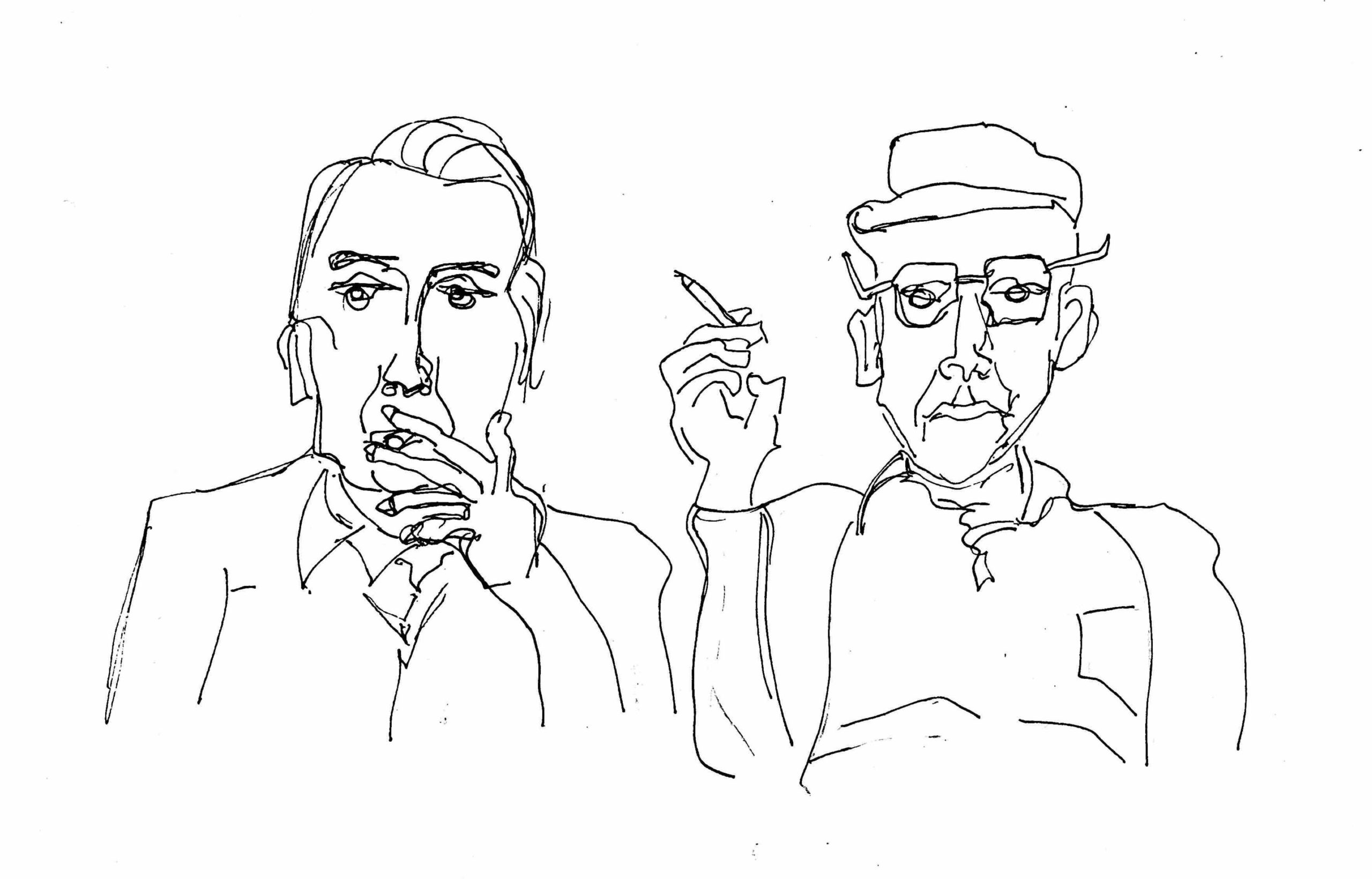
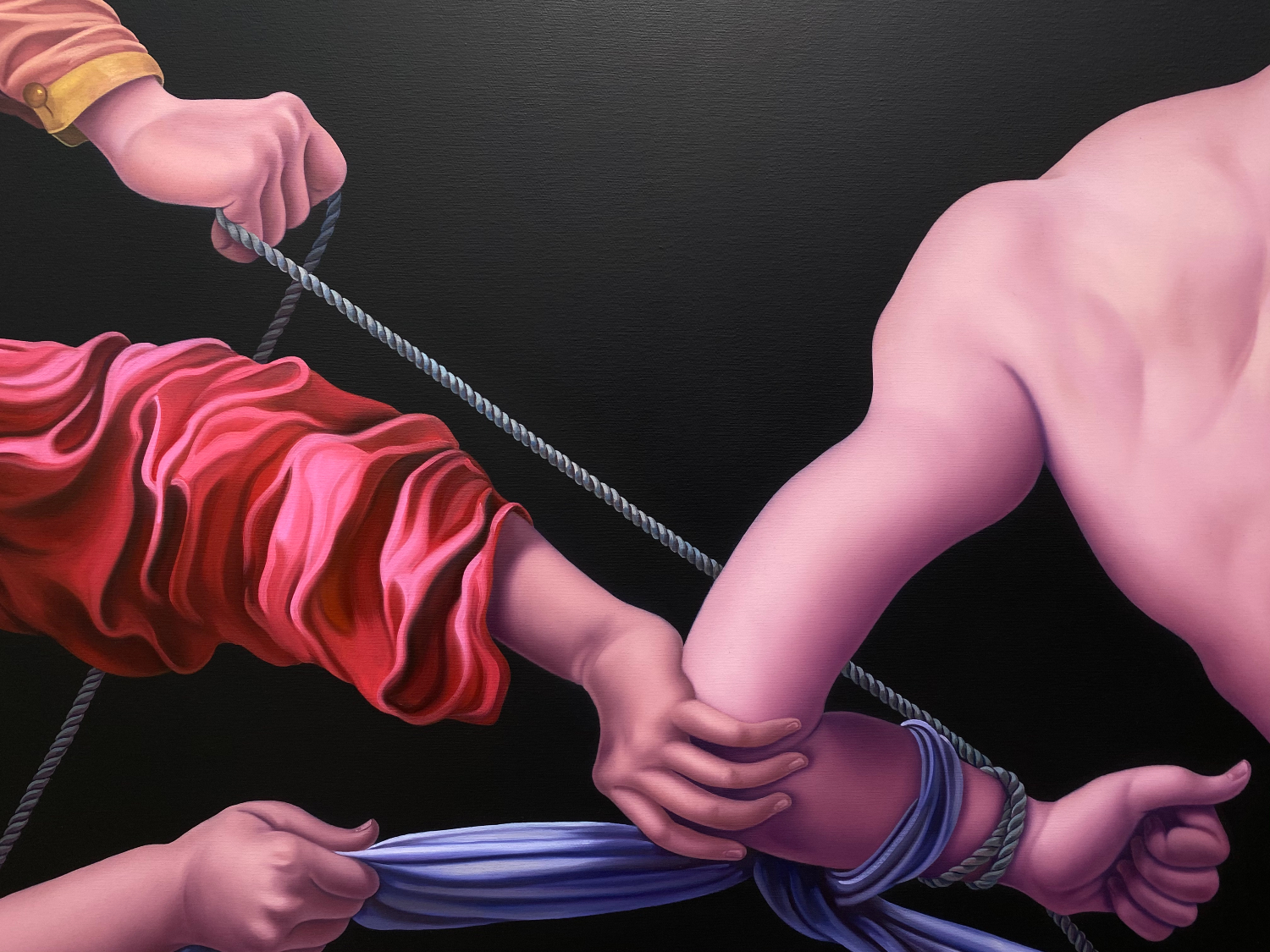
Who hasn’t at one point or another thought about their grocery list during a dissatisfying hook-up? Or felt like they were becoming a dog while obsessively checking for a text reply? In her latest book, Pick Me Up (2025), Sophie Delay revisits the various attitudes toward love that she experienced in the span of one year. Delay’s ecstatic, amorphous illustrations recount relatable private experiences; her goal is connection, and sometimes the best connections are unexpected. Her single-image stories show a vulnerability as joyful as it is jagged; she treats the beautiful and the uncomfortable with equal measure. Her printing technique of choice is a riso press. "A riso press," she says,
is like an offset press where you have all these different rolls of ink and can only print one layer at a time. You start with your lightest color, like yellow, and put that in and it just prints yellow. Then you switch your roller to do the next color, and so on. Each page takes a really long time and it’s a very intense process if you’re doing it all by hand, because I was doing the writing, then doing the illustration, then going over with color layers and using gouache, but also pastels—and then photocopying all of it, putting it into Photoshop, so that I could layer the color on top of the outline and make sure it lined up, and then printing each layer.
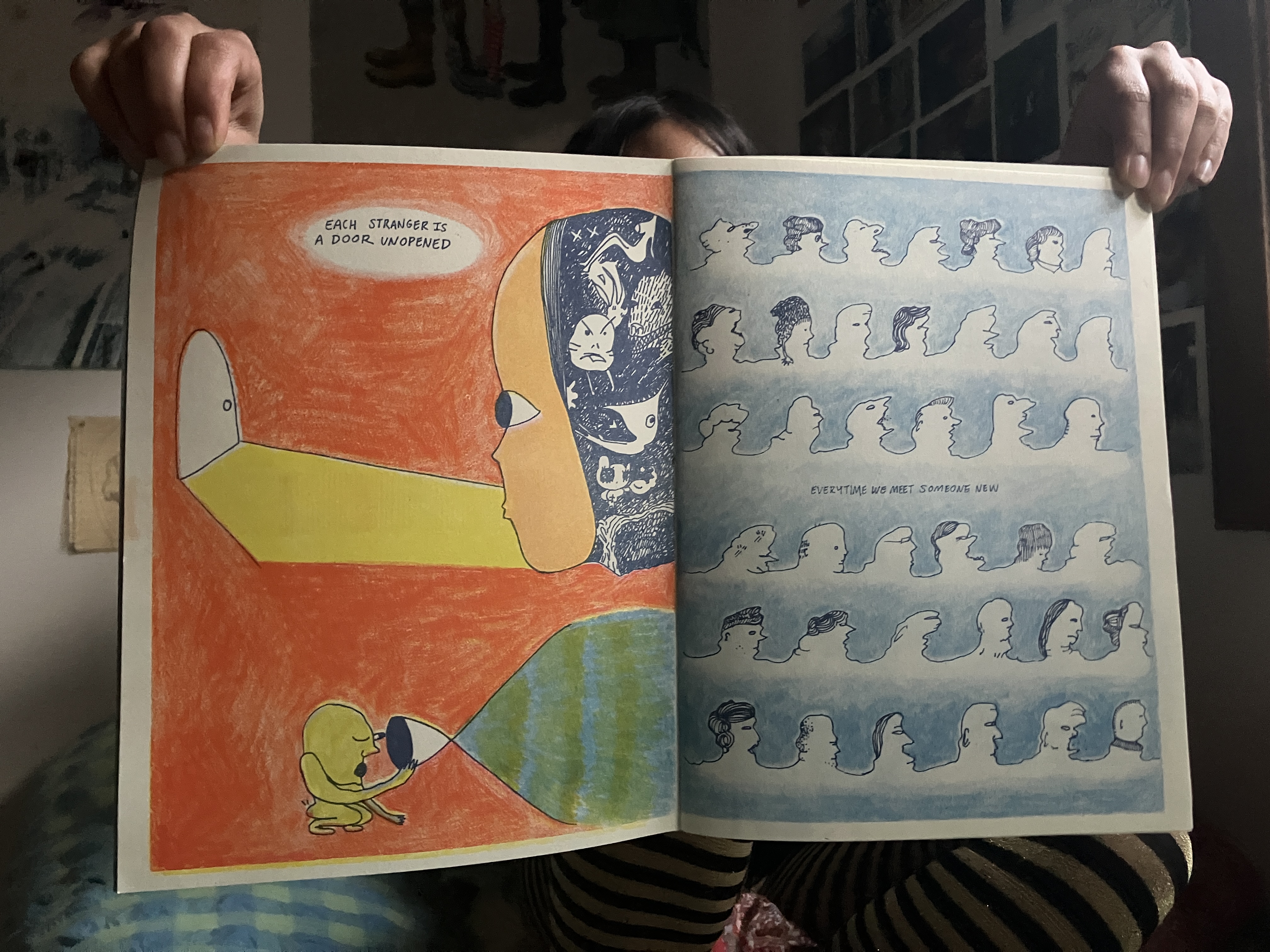

Her process creates the illusion that the color of the pages might rub right off on your fingers. “Most people who do riso will separate the layers through Photoshop, but I wanted to achieve a specific pastel texture throughout the book, because I like that raw look.” Her previous comic book, Neighbors, contained 74 individual risograph layers. Taking this extra time in her artistic practice is about “treating the materials with a reverence to help me respect what I do.” Delay’s philosophy of creation also revolves around the idea that “the way to make good art is to keep chasing the one thing that’s bothering you.” This means sometimes that “doing drawings you hate are the most formative moments of your practice.”
Delay believes “every book is a gift.” To create drawings that won’t be included, and to print each copy by hand, grants freedom through prioritizing physical mediums that can’t be recreated in the digital world of sharing. “A book doesn’t pretend to be anything it’s not. It’s a third party for connection. On social media, there’s the illusion that there is no third party.... It’s preying on people’s will to be unique. Which is so destructive to human connection. And it’s almost contradictory: you want to feel unique, but at the end of the day, no one wants to feel alone. What good comics do and what good writing does is approach something with an element of detail and authenticity; you’re not going to put it out with the intention or the knowledge that everyone’s gonna get it. But something inside you knows or is searching for someone who does. And if it reaches those people, that’s success.”
PERI BENJAMIN
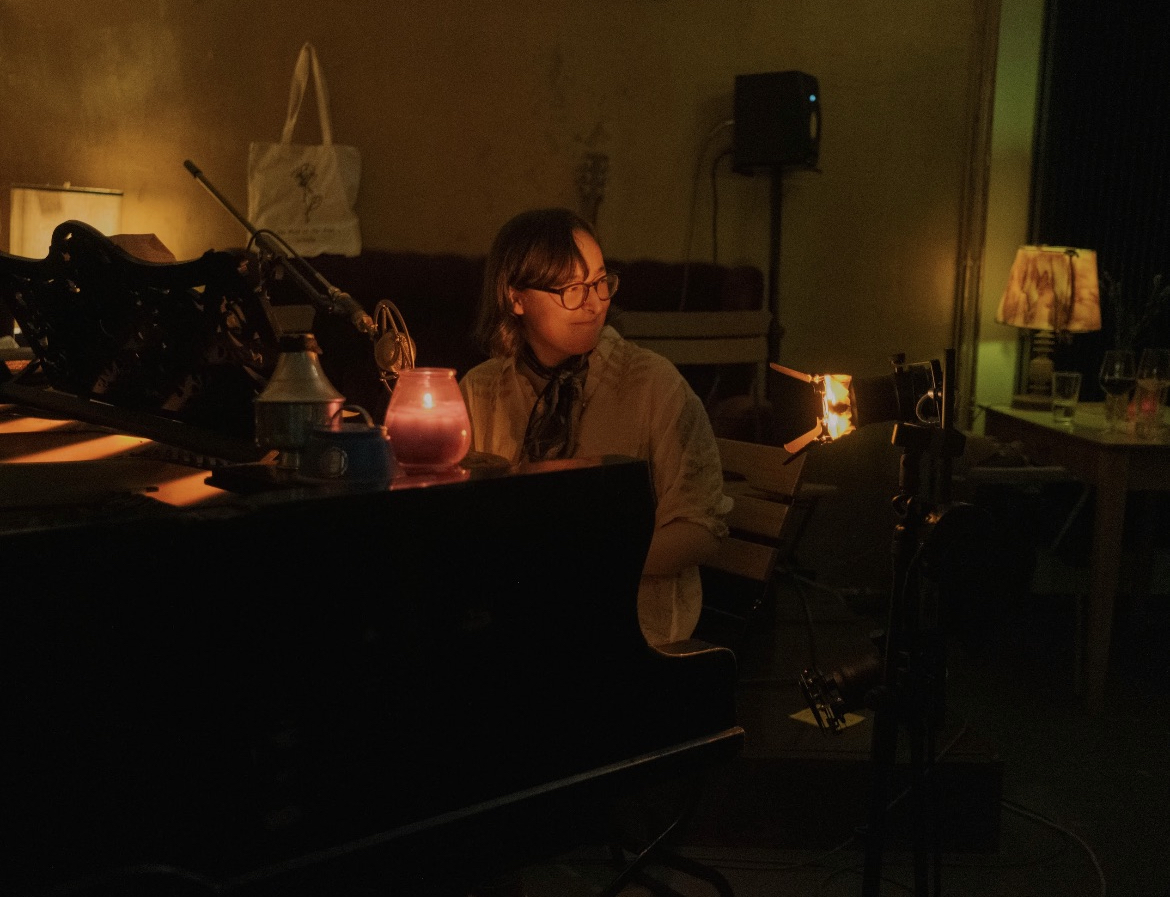
Peri Benjamin is a musician born and raised in San Francisco, studying in Berlin, and frequently traveling around Germany, Estonia, and Czechia to perform jazz and folk. Known for using fringe instruments—she plays, among others, the accordion and the harmonium—you can hear her at open mics, gymnasiums, clubs, and any random corner that has a piano. She’s probably riding on the handlebars of someone’s bike right now in a city she’s never been to, or admiring her vinyl copy of the Xanadu soundtrack.

Her 2024 EP Daydreaming About Waltzing, produced by Manabu Endo with Berlin-based Pacific Echo Records, highlights her multi-instrumentalist capabilities in piano and accordion alongside a characteristically rich voice. On the keys, Benjamin shifts effortlessly from lightness to solidity. “Dublin” features not just heavy, ambient piano and the kind of vocals deserving of an empty cathedral, but also atmospheric touches like the sound of rainfall, a crackling fire, radio static, or the creaking of wooden planks, all rendered, remarkably, from one 80-year-old accordion, opening and closing without any notes being played. As if recorded in a small shack somewhere along a storm-battered coast, the entire track is humid, cooled by the dreamlike quality that touches the EP in title and tone.
In “Alcatraz,” Benjamin’s piano comes up against a shrieking cello played by frequent collaborator and co-producer Ruben Rebholz (other tracks featuring Rebholz include “The Juggler” and “Wind”). The starting point for this track, as Benjamin explained when she sent me an early version of it, was a memory of when she and her Girl Scout troupe had to spend a night on Alcatraz Island. In tandem with a piano melody that plunks and drips through Rebholz’s escalating tremolo, Benjamin’s lyrics transform a haunting childhood experience into something discordant and surreal: “If you find a flower in red / and you think you’ve lost your head / and it’s rolling in the playball yard / and you think you’ve only lost a shard / well, don’t miss your boat back home, or you’ll have to spend the night.”
The last song on the EP, “Diana’s Earrings,” leaves the listener with a sense that the technical skill in Benjamin’s music is as important as her instinct to surprise, to bend expectations. It begins like a typical jazz song until the foley experimentation of a guitar comes in, mimicking what sounds like a knife being sharpened. Shortly into the first verse, Benjamin’s voice is warped like the sound of a thundersheet in motion. In this track, and all throughout Daydreaming About Waltzing, Benjamin’s top collaborator is the natural world—and through listening to it, she invites us to partake in hers.